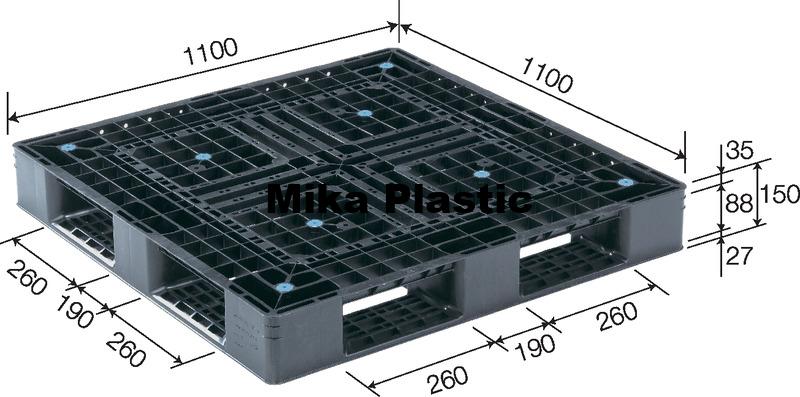
Choosing the right pallet material is a critical decision for manufacturers, warehouses, and logistics operators. Pallets are used repeatedly across storage, handling, and transportation, so the choice between plastic pallets and wooden pallets can significantly impact cost, efficiency, hygiene, and safety.
This article explains the key differences between plastic and wooden pallets and helps you decide which option is best for your business.
Why Pallet Choice Matters in Industrial Operations
Pallets may seem like a simple item, but they play an important role in:
Protecting goods during handling and transport
Supporting warehouse efficiency and automation
Meeting hygiene and compliance requirements
Controlling long-term operational costs
Using the wrong type of pallet can lead to product damage, safety risks, and higher replacement expenses.
Overview: Plastic Pallets vs Wooden Pallets
Before diving into detailed benefits, here is a high-level comparison:
| Feature | Plastic Pallets | Wooden Pallets |
|---|---|---|
| Durability | High, long service life | Moderate, prone to damage |
| Hygiene | Excellent, washable | Poor, absorbs moisture |
| Weight Consistency | Consistent | Varies |
| Maintenance | Minimal | Frequent repairs |
| Export Compliance | ISPM 15 exempt | ISPM 15 treatment required |
| Environmental Impact | Reusable & recyclable | Often single-use |
| Initial Cost | Higher | Lower |
| Long-Term Cost | Lower | Higher over time |
1. Durability and Lifespan
Plastic Pallets
Plastic pallets are designed for repeated use over many years. They are resistant to:
Cracking and splintering
Moisture and humidity
Chemicals and oils
In high-cycle environments such as warehouses and distribution centers, plastic pallets can last many times longer than wooden pallets.
Wooden Pallets
Wooden pallets are more susceptible to:
Broken boards
Loose nails
Warping due to moisture
As a result, wooden pallets often require frequent repair or replacement.
Conclusion: Plastic pallets offer superior durability and are more suitable for long-term use.
2. Hygiene and Cleanliness
Plastic Pallets
Plastic pallets have smooth, non-porous surfaces that:
Do not absorb water or liquids
Are easy to wash and sanitize
Do not harbor bacteria, mold, or pests
This makes them ideal for industries such as:
Food & beverage
Pharmaceuticals
Medical devices
Wooden Pallets
Wooden pallets absorb moisture and can trap:
Dirt and dust
Bacteria and fungi
Insects and pests
This makes them unsuitable for hygiene-sensitive applications.
Conclusion: Plastic pallets are the clear choice where hygiene and cleanliness are critical.
3. Consistency and Operational Efficiency
Plastic Pallets
Plastic pallets are manufactured with precise dimensions and uniform weight. This consistency is important for:
Automated conveyor systems
High-bay racking
Robotic pallet handling
Wooden Pallets
Wooden pallets vary in size and weight due to:
Different wood quality
Repairs and modifications
Warping over time
In automated systems, this inconsistency can cause jams or inefficiencies.
Conclusion: Plastic pallets provide better compatibility with modern warehouse automation.
4. Safety in the Workplace
Plastic Pallets
Safety features of plastic pallets include:
Smooth edges (no splinters)
No protruding nails
Stable stacking design
This reduces the risk of injuries to workers during handling.
Wooden Pallets
Wooden pallets can cause:
Cuts from splinters
Injuries from exposed nails
Collapses due to broken boards
Conclusion: Plastic pallets offer a safer working environment.
5. Export and International Shipping
Plastic Pallets
Plastic pallets are ISPM 15 exempt, which means:
No heat treatment required
No fumigation
No risk of customs rejection due to pest contamination
This makes them ideal for export and international logistics.
Wooden Pallets
Wooden pallets must comply with ISPM 15 regulations, requiring:
Heat treatment or fumigation
Proper certification markings
Failure to comply can result in shipment delays or rejection.
Conclusion: Plastic pallets simplify export processes and reduce compliance risks.
6. Cost Comparison: Short-Term vs Long-Term
Initial Cost
Wooden pallets are cheaper to purchase initially
Plastic pallets require higher upfront investment
Long-Term Cost
Plastic pallets typically:
Last longer
Require little to no maintenance
Reduce product damage
Lower replacement frequency
Over time, plastic pallets often result in a lower total cost of ownership.
Conclusion: Plastic pallets are more cost-effective in long-term operations.
7. Environmental and Sustainability Factors
Plastic Pallets
Modern plastic pallets are:
Reusable over many cycles
Made from recyclable materials (HDPE or PP)
Recyclable at end of life
Their long lifespan reduces overall waste generation.
Wooden Pallets
While wood is a natural material, wooden pallets:
Are often discarded after limited use
Contribute to deforestation
Generate waste from repairs and breakage
Conclusion: Plastic pallets support sustainability goals when reused and recycled properly.
8. Storage and Racking Performance
Plastic Pallets
Rackable plastic pallets can be designed with:
Reinforced bases
Steel bars for high racking loads
Anti-slip surfaces
These features improve performance in warehouse racking systems.
Wooden Pallets
Wooden pallets may sag or break under racking loads, especially when reused many times.
Conclusion: Plastic pallets perform better in racking and high-load environments.
Which Pallet Is Right for Your Business?
Choose Plastic Pallets If:
You require hygiene and cleanliness
You use automated handling systems
You export goods internationally
You want lower long-term operating costs
Choose Wooden Pallets If:
Budget is extremely limited
Usage is short-term or one-way
Hygiene and consistency are not critical
Benefits of plastic pallet vs wooden pallet