- The Malaysian Context: Why Pallet Choice Matters?
Malaysia’s logistics sector is undergoing a massive transformation. The rise of Automated Storage and Retrieval Systems (ASRS) in warehouses across Selangor and Johor, coupled with the implementation of the National Sustainability Reporting Framework (NSRF), has forced businesses to look beyond the initial purchase price.
While wooden pallets remain the traditional “backbone” of the industry, plastic alternatives are rapidly gaining ground in high-tech and regulated sectors.
- Wooden Pallets: The Traditional Powerhouse
Wooden pallets account for the majority of the market share in Malaysia due to their familiarity and low entry cost.
Key Advantages
- Low Initial Investment: For many Malaysian SMEs, the lower upfront cost of wood is its biggest selling point. Softwood pallets remain the most budget-friendly option for domestic transport.
- Easy Customization: Need a non-standard size for heavy machinery or unique automotive parts? Wooden pallets can be custom-built quickly by local manufacturers.
- High Load Capacity: Hardwood pallets offer excellent structural strength, making them ideal for heavy industrial goods.
- Renewable & Recyclable: Wood is a natural resource. In Malaysia, damaged pallets are often repurposed into furniture or wood chips, aligning with basic circular economy principles.
The Trade-offs
- ISPM 15 Compliance: For export-oriented businesses, wooden pallets must undergo heat treatment (HT) or fumigation to meet ISPM 15 standards. This adds cost and lead time.
- Maintenance Issues: Splinters, protruding nails, and mold (especially in Malaysia’s 80%–90% humidity) can damage goods and cause workplace injuries.
- Short Lifespan: A typical wooden pallet lasts for roughly 3 to 5 trips before needing significant repair.
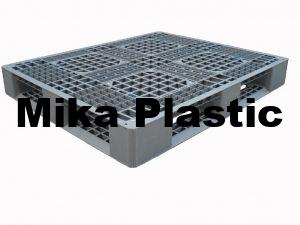
- Plastic Pallets: The Modern Logistics Solution
Plastic pallets are increasingly viewed as a long-term investment rather than a disposable expense.
Key Advantages
- Hygiene & Compliance: In Malaysia’s booming F&B and Pharmaceutical sectors, plastic is the gold standard. They are non-porous, resistant to mold, and can be easily sanitized to meet HACCP and GMP requirements.
- Exemption from ISPM 15: Plastic pallets do not harbor pests. This means zero delays at Port Klang or Tanjung Pelepas due to phytosanitary inspections, and no expensive heat treatment costs.
- Durability & ROI: A high-quality plastic pallet can last 10 years or over 250 trips. While the upfront cost is higher, the cost-per-trip is significantly lower than wood.
- ASRS Compatibility: Automated warehouses require precision. Plastic pallets are injection-molded, meaning they have 100% consistent dimensions, preventing “pallet jams” in robotic systems.
The Trade-offs
- Higher Upfront Cost: They can be 3x to 5x more expensive than wood initially.
- Difficult to Repair: If a plastic pallet cracks under extreme stress, it usually cannot be patched up like a wooden board; it must be ground down and recycled.
- Head-to-Head Comparison
Feature | Wooden Pallets | Plastic Pallets |
Initial Cost | Low (RM 35 – RM 60) | High (RM 120 – RM 300+) |
Lifespan | 1 – 3 years | 8 – 12 years |
Moisture Resistance | Poor (Absorbs water/mold) | Excellent (Waterproof) |
Export Status | Requires ISPM 15 Stamp | ISPM 15 Exempt |
Best For | Heavy industry, one-way shipping | Food, Pharma, Automated Warehousing |
Weight | Heavy (increases fuel costs) | Lightweight (saves air freight costs) |
Export to Sheets
- Sustainability and ESG in Malaysia
With the Malaysian government pushing for ESG (Environmental, Social, and Governance) adoption, businesses are being scrutinized on their “Scope 3” emissions.
- Wood is often marketed as “greener” because it is biodegradable. However, the carbon footprint of frequent replacements and the chemicals used in fumigation are growing concerns.
- Plastic pallets in Malaysia are now frequently made from recycled HDPE. Because they last 10x longer, they actually reduce the total volume of waste generated by a warehouse over a decade. Many Malaysian suppliers now offer “buy-back” programs for old plastic pallets to ensure a closed-loop system.
- The Verdict: Which Should You Choose?
Choose Wooden Pallets if:
- You are a small business with limited initial capital.
- Your goods are extremely heavy or require non-standard pallet dimensions.
- You are doing one-way shipping where you do not expect to get the pallet back.
Choose Plastic Pallets if:
- You operate in Cold Chain, Food, or Pharmaceuticals.
- You use Automated Storage (ASRS) or high-density racking.
- You have a “closed-loop” logistics system where pallets return to your facility.
- You are an active exporter looking to eliminate ISPM 15 compliance headaches and reduce air freight weight.